
Usage-Based Insurance: Snapshot, SmartRide & Drivewise
Progressive's Snapshot, Nationwide's SmartRide and Allstate's Drivewise can lower your rate for good driving — or raise it. Here's how each actually works.

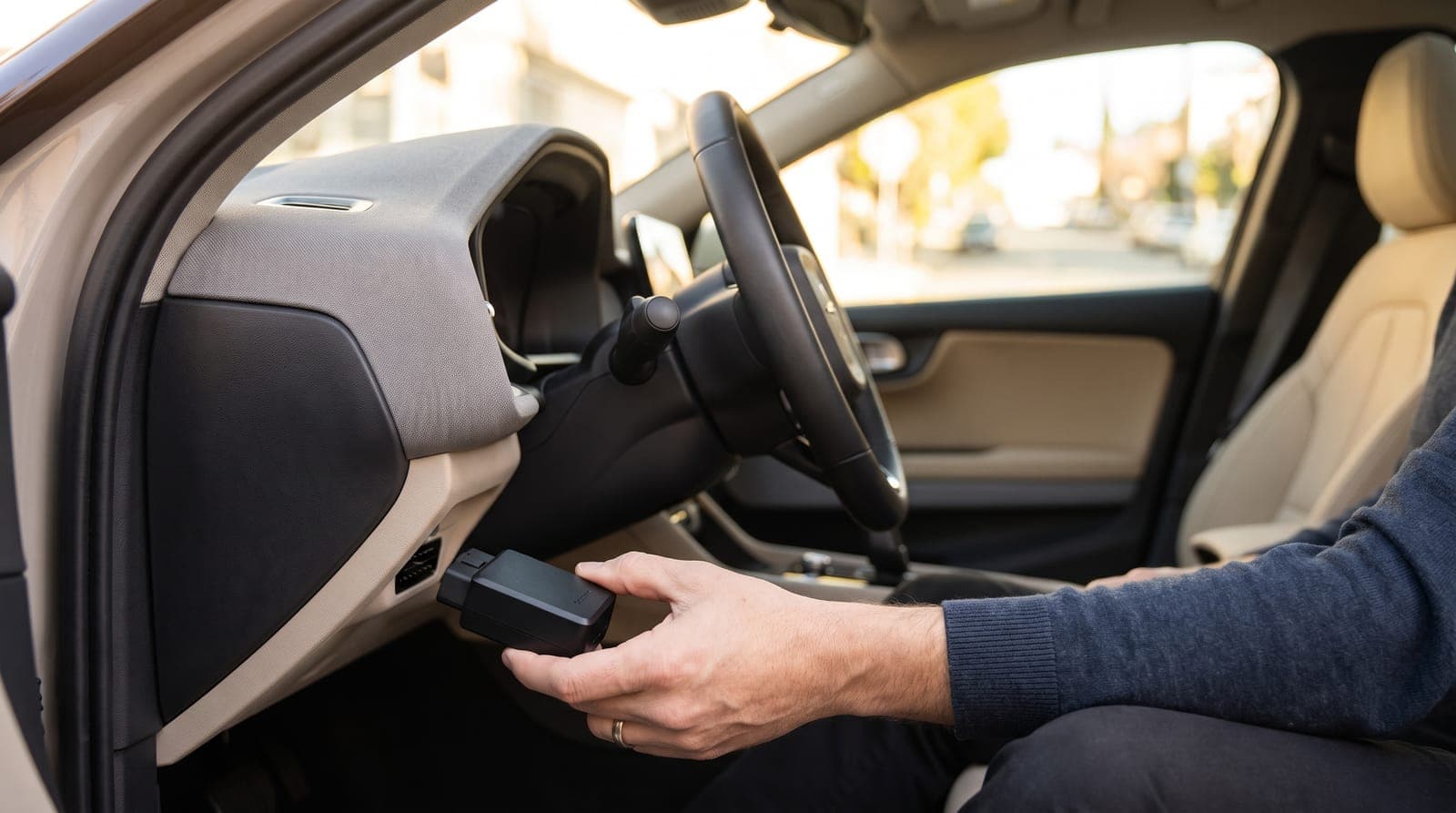
Usage-based insurance, sometimes called telematics insurance, prices part of your policy on how you actually drive instead of relying only on traditional factors like age, location and credit-based insurance score. Three of the largest branded programs are Progressive's Snapshot, Nationwide's SmartRide (paired with a separate mileage-based program, SmartMiles), and Allstate's Drivewise. They get compared constantly because they're offered by three of the biggest national carriers — but they don't all work the same way, and they don't all carry the same risk.
How Snapshot, SmartRide and Drivewise actually work
Snapshot is available as either a smartphone app or a plug-in device, which makes it one of the few programs that still works for drivers whose phone or state rules out an app-only option. It measures hard braking, time of day, mileage, and — if you use the app version — phone handling while the car is moving.
SmartRide is Nationwide's behavior-based program, available through the app or a plug-in device, and scores things like hard braking and driving times. Nationwide runs a second, separate program called SmartMiles that prices a policy by the mile instead, aimed at people who simply don't drive much regardless of how carefully.
Drivewise is Allstate's app-based program, built on Arity, an Allstate affiliate. It tracks speed, braking and trip timing through the app, and pays out performance rewards on a schedule — typically every six months — rather than only at the point of enrollment.
The trade you're actually making
The pitch for all three programs is the same: drive well, get a lower rate. What often gets less attention is that two of the three can also do the opposite. Progressive states plainly that Snapshot can raise your rate, and puts a number on it: roughly two in ten drivers who enroll see an increase rather than a discount. Allstate discloses that in some states, Drivewise's driving data is used for rating — meaning genuinely risky driving, not just the absence of a discount, can push the premium up.
SmartRide is built differently. Nationwide gives an instant discount just for enrolling, then adjusts the final amount — up to a larger discount — based on how you actually drive during the monitoring period. Nationwide is unusually direct that the enrollment discount is not a floor: your final SmartRide discount can shrink all the way to zero. That's a real downside if you were counting on the enrollment number, but it isn't the same thing as a program that can price you above where you started.
State availability and the fine print
None of these programs are offered everywhere on the same terms. Snapshot is not offered in California. Drivewise savings are unavailable in California and Alaska. Telematics regulation also varies more broadly by state — some states limit or prohibit using driving data to raise a rate at all, which changes the actual risk profile of enrolling depending on where you live. The program's own signup page, not a general description like this one, is the place to confirm what applies in your state.
Ask the specific question — in writing if you can — of whether the program can only ever help your rate, or whether it can also raise it. Disclosure quality varies: some carriers state the downside plainly, the way Progressive does with Snapshot's roughly-two-in-ten figure, while others describe the program mainly in terms of the discount. A carrier being vague about the downside is itself useful information.
Is a telematics program worth enrolling in?
It tends to suit drivers whose actual habits are better than what a traditional rating profile assumes — smooth braking, mostly daytime driving, modest mileage — since that's exactly what these programs are built to detect and reward. It's a weaker fit for anyone whose driving is genuinely erratic, who regularly lets someone else drive the insured car, or whose trips don't reflect normal use (a lot of highway merging and hard stops in unfamiliar traffic, for instance). Whether you can enroll at all can also come down to logistics: an app-only program needs a compatible phone that's in the car every trip, while a plug-in device works regardless of who's holding the phone.
This guide is general information, not insurance advice, and does not account for your state's specific regulations. Figures cited are industry estimates from published rate studies. VIP Car Insurance is a free comparison service and is not an insurer.
Questions, answered
The things people actually ask.